
The High Cost of Smart Boards: Unraveling the Price Tag
author: ELON
2025-12-15

The Allure and Costly Reputation of Smart Boards
In modern educational and corporate settings, smart boards have become a symbol of advanced technology. Walk into any state - of - the - art classroom or high - end
conference room, and chances are you'll spot one of these sleek, interactive devices at the front. They've replaced traditional whiteboards and projectors in many scenarios,
offering a more engaging and dynamic way to present information, facilitate discussions, and conduct lessons.
However, it's no secret that smart boards often come with a hefty price tag. For schools on a tight budget or small businesses looking to upgrade their meeting spaces, the
cost can be a significant deterrent. A basic smart board might start at a few thousand dollars, while high - end models with advanced features can easily reach into the tens
of thousands. This has led many to wonder: why are smart boards so expensive? In this article, we'll delve deep into the factors contributing to their high cost, from the technology
inside to the development and production processes.
Technological Marvels: Advanced Features Driving Up the Cost
1. Interactive Touch Technology
At the heart of a smart board is its interactive touch technology, which is far more sophisticated than the touchscreens on our everyday smartphones or tablets. Smart boards
often use infrared, electromagnetic, or capacitive touch technologies. For example, infrared - based touch systems work by having an array of infrared emitters and receivers
around the edges of the board. When an object, such as a finger or a stylus, breaks the infrared beams, the system can precisely calculate the position of the touch, enabling
users to write, draw, or interact with on - screen elements.
This high - precision touch technology comes at a cost. Developing algorithms to accurately detect and interpret multiple touches simultaneously (a feature known as multi -
touch, which allows for gestures like pinch - to - zoom) requires significant research and development resources. Additionally, the hardware components, such as high - quality
infrared sensors or capacitive touch layers, must be durable enough to withstand continuous use in educational or corporate settings, where they may be touched hundreds or
even thousands of times a day. Any compromise in the quality of these components could lead to inaccurate touch responses, frustrating users and reducing the overall utility of
the smart board.
2. High - Resolution Displays
Another major cost - contributing factor is the high - resolution display. Smart boards are designed to present information clearly, whether it's detailed graphs in a business
presentation, complex diagrams in a science class, or high - definition videos. To achieve this, they are equipped with displays that often have resolutions of 1920x1080 pixels
(Full HD) or even higher, such as 3840x2160 pixels (4K).
High - resolution displays require more advanced manufacturing processes. The production of panels with a higher pixel density involves more precise alignment of sub - pixels,
which is a challenging and costly endeavor. Each pixel on the screen needs to be individually controlled to produce accurate colors and sharp images. This necessitates high -
end display drivers and advanced backlighting systems. For instance, some smart boards use LED backlighting with local dimming technology to enhance contrast and provide
a more vivid visual experience. The development and integration of such advanced backlighting not only improve the display quality but also add to the overall cost of the smart board.
Quality Components: The Building Blocks of Durability and Performance
1. Premium Display Panels
Smart boards are equipped with premium display panels that are a cut above the average consumer - grade displays. These panels offer significantly better color accuracy, which
is crucial for presenting content in its true form. For example, in a design - related business presentation, accurate color representation ensures that clients can see the exact hues
and tones of a product, while in an art class, students can study the precise colors of famous artworks.
The contrast ratios on high - end smart board displays are also remarkable. A high contrast ratio means that the difference between the darkest blacks and the brightest whites is
more pronounced. This results in images that are more vivid and text that is easier to read. Whether it's a dimly lit conference room or a classroom with varying lighting conditions,
the high - contrast display on a smart board can adapt and provide a clear visual experience.
The cost of these high - quality display panels is high due to several factors. The manufacturing process requires advanced techniques to achieve the high - quality standards. For
instance, the production of panels with a high pixel density, which is necessary for sharp and detailed images, involves precise alignment of sub - pixels. This precision manufacturing
demands expensive equipment and highly skilled labor. Additionally, the materials used in these premium panels, such as high - quality glass substrates and advanced liquid crystal
materials (in the case of LCD - based smart boards) or organic light - emitting diodes (for OLED - based smart boards), are costly.
2. Robust Processing Units
Just like a powerful engine in a car, a smart board needs a robust processing unit to run smoothly. The processing unit, often a high - performance CPU (Central Processing Unit) or
a system - on - a - chip (SoC), is responsible for handling all the operations on the smart board. It processes touch inputs, manages the display output, runs applications, and enables
seamless connectivity with other devices.
When multiple users are interacting with the smart board simultaneously, for example, during a collaborative brainstorming session in a corporate meeting or a group activity in a
classroom, the processing unit has to work hard to ensure that the responses are immediate and the overall experience is fluid. A slow or underpowered processing unit would lead
to lag, where the actions on the screen take a noticeable amount of time to register, frustrating users and defeating the purpose of the interactive nature of the smart board.
High - performance processing units come at a cost. They are designed with the latest semiconductor technologies, which require significant research and development investment.
The manufacturing of these advanced chips also involves complex and expensive processes, such as advanced lithography techniques to create smaller and more efficient transistors.
These costs are then factored into the overall price of the smart board, with the processing unit often accounting for a substantial portion of the total production cost, sometimes up to 20
- 30% depending on the model and its performance requirements.
Research and Development: Innovation Comes at a Price
The high cost of smart boards can also be attributed to the substantial investment in research and development (R&D). Behind every new smart board model lies a long and complex
R&D process that involves a team of engineers, software developers, and designers working together to create a product that is not only technologically advanced but also user - friendly.
For instance, developing new features such as improved touch sensitivity, better integration with educational or business software, and enhanced interactivity requires significant time and
resources. R&D teams have to conduct extensive research on the latest technologies, experiment with different materials and components, and carry out countless tests to ensure the
reliability and performance of the smart board.
A major smart board manufacturer might spend millions of dollars each year on R&D. This includes the cost of hiring highly skilled professionals, purchasing expensive testing equipment,
and funding research projects at universities or research institutions. For example, a company might invest in researching new ways to improve the display's energy efficiency without
sacrificing image quality. This research could involve exploring new types of display materials or developing more efficient backlighting systems. The results of these R&D efforts are then
incorporated into the design and production of new smart boards, which, in turn, contributes to their high cost.
Moreover, as technology evolves rapidly, smart board manufacturers need to constantly invest in R&D to keep up with the competition. New software platforms, communication protocols,
and user - experience trends emerge regularly. To ensure their products remain relevant and competitive, manufacturers must invest in R&D to integrate these new technologies into their
smart boards. This continuous cycle of innovation and R&D investment means that the cost of developing smart boards remains high, and these costs are ultimately passed on to the consumers.
Branding and Market Positioning: The Influence of Reputation
In the world of smart boards, branding and market positioning play a significant role in determining their price. Just like in the automotive industry, where luxury brands like Mercedes - Benz
and BMW command higher prices due to their reputation for quality and innovation, well - established smart board brands also benefit from their brand image.
Brands such as SMART Technologies, Promethean, and EZ Cast have been in the smart board market for a long time. They have built a reputation for reliability, high - quality products,
and excellent customer service. These brands invest heavily in marketing and brand building. For example, they sponsor educational technology conferences, participate in industry
exhibitions, and conduct marketing campaigns targeted at schools, businesses, and government institutions. This continuous marketing effort helps to increase brand awareness and
maintain a positive brand image in the market.
Maintaining a brand's reputation also involves providing top - notch customer service. Reputable smart board manufacturers offer comprehensive after - sales support, including technical
assistance, software updates, and warranty services. In case of any technical issues, their customers can expect quick response times and efficient solutions. This level of service is costly
to provide. It requires maintaining a large team of technical support staff, establishing service centers in different regions, and investing in inventory to ensure that replacement parts are
readily available. All these costs associated with brand building and maintenance are factored into the price of the smart boards, making them more expensive compared to lesser - known brands.
Moreover, brand - loyal customers are often willing to pay a premium for products from trusted brands. In the educational sector, schools may be more inclined to purchase smart boards
from well - known brands because they trust the quality and know that these brands have a track record of meeting the specific needs of educational institutions. Similarly, businesses may
prefer established smart board brands for their corporate meetings and training sessions, believing that they offer a more professional and reliable solution. This brand loyalty gives these
well - known brands the power to set higher prices, further contributing to the overall high cost of smart boards in the market.
Conclusion: Weighing the Cost Against the Benefits
In conclusion, the high cost of smart boards can be attributed to a combination of factors. Their advanced technological features, such as interactive touch technology and high - resolution
displays, require sophisticated components and complex manufacturing processes. The use of premium display panels and robust processing units not only enhances performance but also
significantly increases production costs. The substantial investment in research and development, which is crucial for innovation and keeping up with technological advancements, further
adds to the price. Additionally, branding and market positioning play a role, with well - known brands often charging more for their reputation and quality - associated image.
While smart boards are undeniably expensive, it's important to consider the benefits they bring. In educational settings, they can enhance student engagement and learning outcomes, making
lessons more interactive and memorable. In the corporate world, they can boost team collaboration, improve the efficiency of meetings, and make presentations more impactful. For organizations
with the budget and a real need for these capabilities, the investment in a smart board can be well - worth it.
However, for those with limited resources, alternatives such as interactive projectors or even large - screen tablets with interactive apps might be more suitable. These options can offer some of
the interactive functionality of smart boards at a lower cost.
Ultimately, the decision to purchase a smart board should be based on a careful evaluation of your specific needs, budget, and the long - term value it will bring to your educational or business
environment. By understanding the reasons behind their high cost, you can make a more informed decision about whether a smart board is the right investment for you.
How to choose CPU for interactive smart board
Interactive Whiteboards: Transform Classrooms, Meetings, and Collaboration in 2025
Related Article
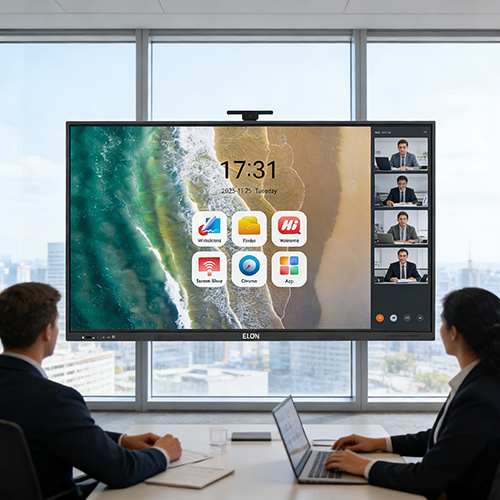
Learn what makes a reliable smart board manufacturer, including production capacity, quality control, certifications, and OEM support.
What Makes a Reliable Smart Board Manufacturer?
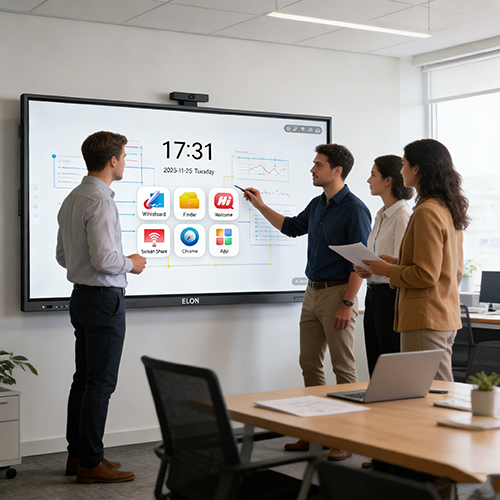
Discover how smart boards improve corporate training and presentations through collaboration, touch interaction, and wireless communication.
How Smart Boards Enhance Training and Corporate Presentations

